August 21, 2026
Melting Point of Metals: Metal Melting Point Chart & Guide
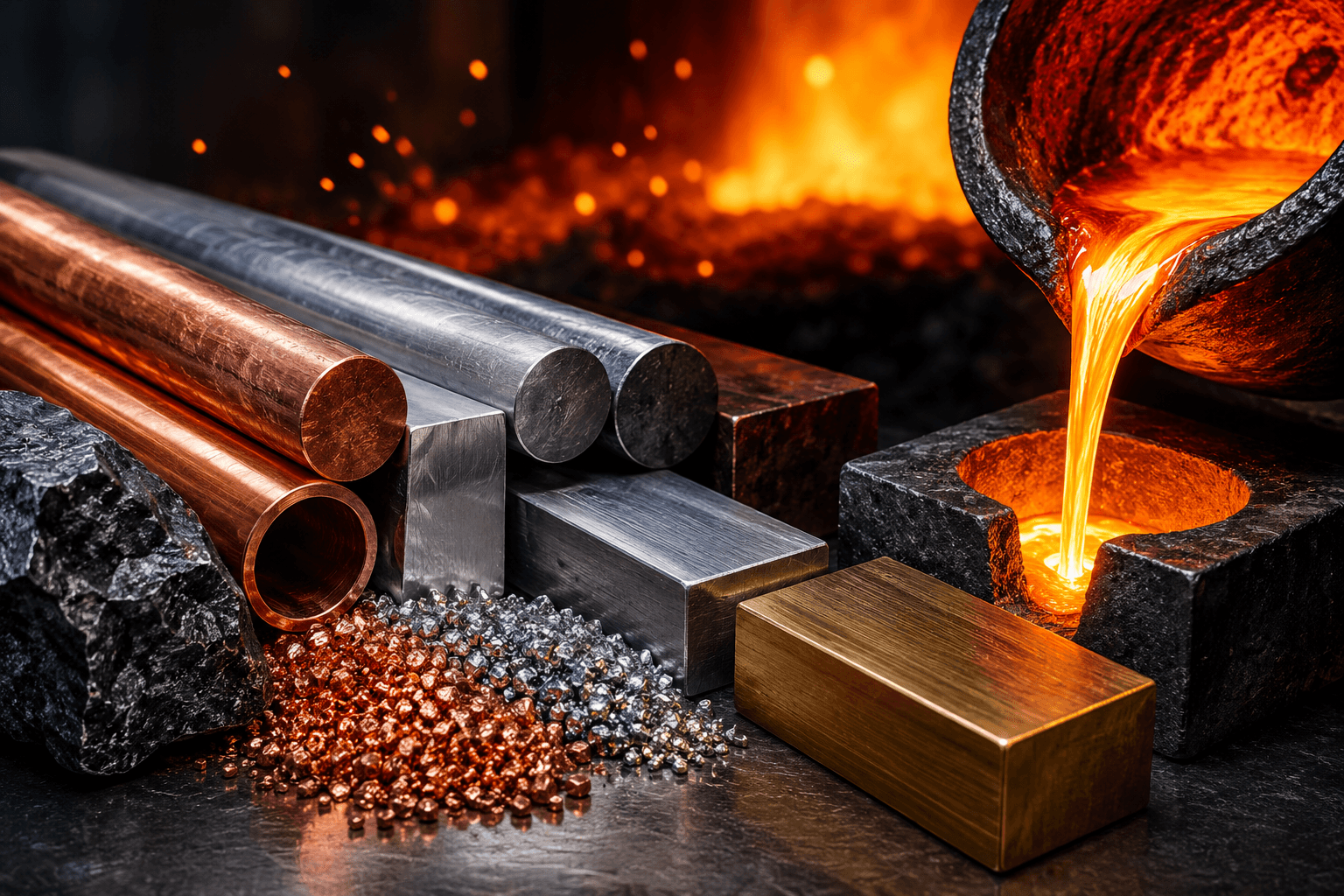
The melting point of a metal is the temperature at which it changes from a solid to a liquid. Melting temperatures vary significantly by material. For example, aluminum melts at approximately 1,221°F (660°C), while pure iron melts at approximately 2,800°F (1,538°C).
There is one important distinction when comparing metal melting points: pure metals generally have a defined melting point, while alloys such as steel, stainless steel, brass and bronze typically melt across a range of temperatures.
Use the metal melting point chart below to compare the approximate melting temperatures of common metals in Fahrenheit and Celsius.
Metal Melting Point Chart
Metal | Melting Point °F | Melting Point °C |
|---|---|---|
Aluminum | 1,221°F | 660°C |
Brass | ~1,650–1,720°F | ~900–940°C |
Bronze | ~1,675–1,900°F | ~913–1,038°C |
Copper | 1,984°F | 1,085°C |
Cast Iron | ~2,060–2,200°F | ~1,127–1,204°C |
Pure Iron | 2,800°F | 1,538°C |
Lead | 621°F | 327°C |
Nickel | 2,651°F | 1,455°C |
Silver | 1,763°F | 962°C |
Carbon Steel | ~2,500–2,800°F | ~1,371–1,538°C |
Stainless Steel | ~2,500–2,790°F | ~1,371–1,532°C |
Titanium | 3,034°F | 1,668°C |
Tin | 449°F | 232°C |
Tungsten | 6,192°F | 3,422°C |
Zinc | 788°F | 420°C |
Note: Melting temperatures are approximate. Alloy melting ranges vary according to grade and chemical composition. When temperature is critical to an application, consult technical data for the specific material and grade.
What Are the Melting Points of Common Metals?
There is no single temperature at which all metal melts. Atomic structure and composition affect melting behavior, which is why the melting temperature of aluminum is significantly different from that of steel or titanium.
Here are melting points and ranges for several of the most commonly searched metals.
What Is the Melting Point of Aluminum?
Pure aluminum has a melting point of approximately 1,221°F (660°C).
Commercial aluminum, however, is commonly alloyed with elements such as magnesium, silicon, copper, manganese or zinc to achieve specific properties. As a result, aluminum alloys such as 5052 and 6061 aluminum have melting ranges rather than one exact melting point.
Aluminum's relatively low melting temperature compared with steel, nickel and titanium is an important consideration in processes involving heat, including welding and casting.
What Is the Melting Point of Steel?
Steel generally melts between approximately 2,500–2,800°F (1,371–1,538°C). The exact melting range depends on the grade and chemical composition.
Steel is an iron-based alloy containing carbon and, depending on the grade, elements such as chromium, nickel, manganese or molybdenum. These alloying elements influence both the properties and melting behavior of the material.
This means carbon steel and alloy steels such as 4140 or 4340 steel do not necessarily have identical melting ranges.
What Is the Melting Point of Stainless Steel?
Stainless steel typically melts between approximately 2,500–2,790°F (1,371–1,532°C), depending on the grade.
Stainless steels contain at least 10.5% chromium, with many grades also containing nickel, molybdenum and other alloying elements. Differences in composition mean that individual grades have different melting ranges.
Stainless Steel Grade | Approximate Melting Range |
|---|---|
304 | ~2,550–2,650°F (1,399–1,454°C) |
316 | ~2,500–2,550°F (1,371–1,399°C) |
410 | ~2,700–2,790°F (1,482–1,532°C) |
430 | ~2,600–2,750°F (1,427–1,510°C) |
For applications where temperature is critical, use technical data for the specific stainless steel grade rather than a general stainless steel melting temperature.
What Is the Melting Point of Copper?
Pure copper melts at approximately 1,984°F (1,085°C).
Copper has a higher melting point than aluminum but a lower melting point than iron, nickel or titanium. Adding other elements to copper creates alloys such as brass and bronze, which have different melting ranges.
What Is the Melting Point of Brass and Bronze?
Brass typically melts around 1,650–1,720°F (900–940°C), while bronze commonly melts around 1,675–1,900°F (913–1,038°C).
Both are copper alloys, but their compositions differ. Brass is primarily an alloy of copper and zinc, while traditional bronze primarily contains copper and tin. The exact melting range depends on the percentage and type of alloying elements.
What Is the Melting Point of Iron?
Pure iron melts at approximately 2,800°F (1,538°C).
Pure iron should not be confused with steel or cast iron. Adding carbon and other alloying elements changes the material's properties and melting behavior. This is why cast iron and various steel grades can begin melting at temperatures below the melting point of pure iron.
What Is the Melting Point of Titanium and Nickel?
Pure titanium melts at approximately 3,034°F (1,668°C), while pure nickel melts at approximately 2,651°F (1,455°C).
Both metals are used in alloys designed for demanding applications. However, a high melting point does not automatically mean a material will perform well at temperatures approaching that point. Strength at temperature, oxidation resistance and other properties must also be considered.
Why Do Metals Have Different Melting Points?
Metals have different melting points primarily because their atomic structures and the strength of their metallic bonds differ.
In a solid metal, atoms are arranged in an organized crystalline structure. As the material absorbs heat, its atoms gain energy and vibrate more intensely. Eventually, enough thermal energy is present to disrupt the solid structure and allow the material to transition into a liquid.
Several factors influence a metal's melting temperature:
Atomic bonding: Stronger bonding generally requires more thermal energy to overcome.
Crystal structure: The arrangement of atoms can affect thermal properties.
Alloy composition: Adding other elements can change the temperature at which melting begins and ends.
Impurities: Variations in composition may alter melting behavior.
Pressure: Melting temperature can change with pressure, although standard values are typically given near atmospheric pressure.
These differences help explain why aluminum melts at approximately 1,221°F while tungsten requires temperatures above 6,000°F.
Melting Point vs. Melting Range: What's the Difference?
A melting point describes the temperature at which a pure substance transitions between solid and liquid under a specified pressure. A melting range describes the span of temperatures over which many alloys transition from completely solid to completely liquid.
Two terms are important when discussing alloy melting ranges:
Solidus temperature: The temperature below which an alloy is completely solid.
Liquidus temperature: The temperature above which an alloy is completely liquid.
Between the solidus and liquidus temperatures, solid and liquid phases can coexist.
Why Does Steel Have a Melting Range?
Steel has a melting range because it is an alloy rather than a pure element. Carbon and other alloying elements affect how the material transitions from solid to liquid, so portions of the material may begin melting before it becomes completely liquid.
This is why specifying the grade—such as 1018, 4140 or 304 stainless steel—provides more useful information than asking for the melting point of "steel" alone.
Which Metal Has the Highest Melting Point?
Tungsten has the highest melting point of all pure metals at approximately 6,192°F (3,422°C).
For comparison, titanium melts at approximately 3,034°F (1,668°C), pure iron at 2,800°F (1,538°C) and aluminum at 1,221°F (660°C).
Tungsten's extremely high melting temperature contributes to its use in demanding high-temperature applications. However, melting point is only one factor in material selection; oxidation resistance, mechanical properties and manufacturability also matter.
Which Metal Has the Lowest Melting Point?
Mercury has the lowest melting point among commonly recognized pure metals at approximately -37.9°F (-38.8°C). This is why mercury is liquid at typical room temperatures.
Gallium is another unusually low-melting metal. It melts at approximately 85.6°F (29.8°C), meaning it can melt from the warmth of a person's hand.
Among more common industrial metals, tin melts at approximately 449°F (232°C), lead at 621°F (327°C) and zinc at 788°F (420°C).
Why Does a Metal's Melting Point Matter?
Melting temperature can help determine how a metal can be manufactured, processed and used, particularly when significant heat is involved.
Welding: Welding can involve localized melting of the base and filler metals. Understanding the material's thermal behavior helps determine appropriate processes, filler materials and heat input.
Casting: Metals must be heated beyond the appropriate melting or liquidus temperature before being introduced into a mold. Higher-melting metals generally require equipment capable of safely generating and containing higher temperatures.
Fabrication: Melting behavior and other thermal properties can influence brazing, soldering, forging, hot forming, thermal cutting and heat treatment.
High-temperature applications: Melting point provides context when evaluating materials for elevated-temperature environments, but it should never be the only consideration.
A metal can lose significant mechanical strength long before it melts. Engineers may also need to evaluate creep resistance, oxidation resistance, thermal expansion and mechanical properties at the expected operating temperature.
Frequently Asked Questions About Metal Melting Points
What temperature does metal melt?
There is no single temperature at which all metals melt. Aluminum melts at approximately 1,221°F (660°C), copper at 1,984°F (1,085°C) and pure iron at 2,800°F (1,538°C). Alloys such as steel generally melt across a range of temperatures.
At what temperature does steel melt?
Steel generally melts between approximately 2,500–2,800°F (1,371–1,538°C). The exact melting range varies according to the steel grade, carbon content and other alloying elements.
Does aluminum melt before steel?
Yes. Aluminum melts at a much lower temperature than steel. Pure aluminum melts at approximately 1,221°F (660°C), while steels generally melt at temperatures of approximately 2,500°F (1,371°C) or higher.
Does metal weaken before it melts?
Yes. A metal can lose substantial mechanical strength before reaching its melting point. Elevated temperatures can affect yield strength, tensile strength, creep resistance, oxidation and other properties even while the metal remains completely solid.
Does stainless steel have a higher melting point than steel?
Not necessarily. Both stainless and carbon steels contain multiple grades with different chemical compositions and melting ranges. The most accurate comparison is between specific grades rather than between "stainless steel" and "steel" as broad categories.
Do all metals have the same melting point?
No. Every metal has different thermal properties. Pure aluminum melts at approximately 1,221°F (660°C), for example, while tungsten melts at approximately 6,192°F (3,422°C).
Do metal alloys have a specific melting point?
Many alloys have a melting range rather than one exact melting point. The material begins to melt at its solidus temperature and becomes completely liquid at its liquidus temperature. The range depends on the alloy's chemical composition.
Understanding Metal Melting Temperatures
Melting points can provide useful information when comparing metals, selecting manufacturing processes or evaluating materials for applications involving heat. But the specific grade and composition matter, particularly with alloys such as steel, stainless steel, aluminum, brass and bronze.
When temperature is a critical design factor, consider the material's melting range alongside its strength, oxidation resistance, thermal expansion and other properties at the actual operating temperature.
For quick reference, use the metal melting point chart above to compare common metals in both Fahrenheit and Celsius, and consult grade-specific technical data when exact temperature limits are required.